

How many solar panels are needed to charge an electric vehicle?
To offset 15,000 miles of annual driving, the average electric vehicle requires between 4,000 and 5,000 kilowatt-hours (kWh) of electricity per year. In Western Washington, this translates to adding 11 to 12 premium 400-watt solar panels, assuming they are installed on an unshaded, south-facing roof with an optimal 30-degree pitch.

Moving from Gas Station Volatility to Energy Independence
Choosing to drive an electric vehicle is no longer just an environmental statement; it has become a clear financial strategy. Recent geopolitical disruptions have heavily impacted global oil markets, closing critical maritime supply chokepoints and sending shockwaves straight to local fuel pumps. Across Washington State, drivers are facing historic pain at the pump, with regular gasoline prices climbing well past $5.50 per gallon and premium fuels soaring even higher.
When global events dictate your weekly commuting costs, traditional combustion vehicles turn into a highly volatile monthly liability. Shifting to an EV immediately insulates you from the oil market, but charging entirely from the traditional electrical grid still leaves you tied to fluctuating utility schedules.
The ultimate financial move is pairing your vehicle with a residential solar installation. By generating your own fuel right on your roof, you take total control of your energy footprint. You bypass both the gas station and the utility meter, allowing you to run your vehicle entirely on the sun.
Calculating the Kilowatt-Hours your EV Needs
To determine exactly how many solar panels you need to add to your residential system, we have to look closely at the relationship between your annual mileage and your vehicle’s efficiency.
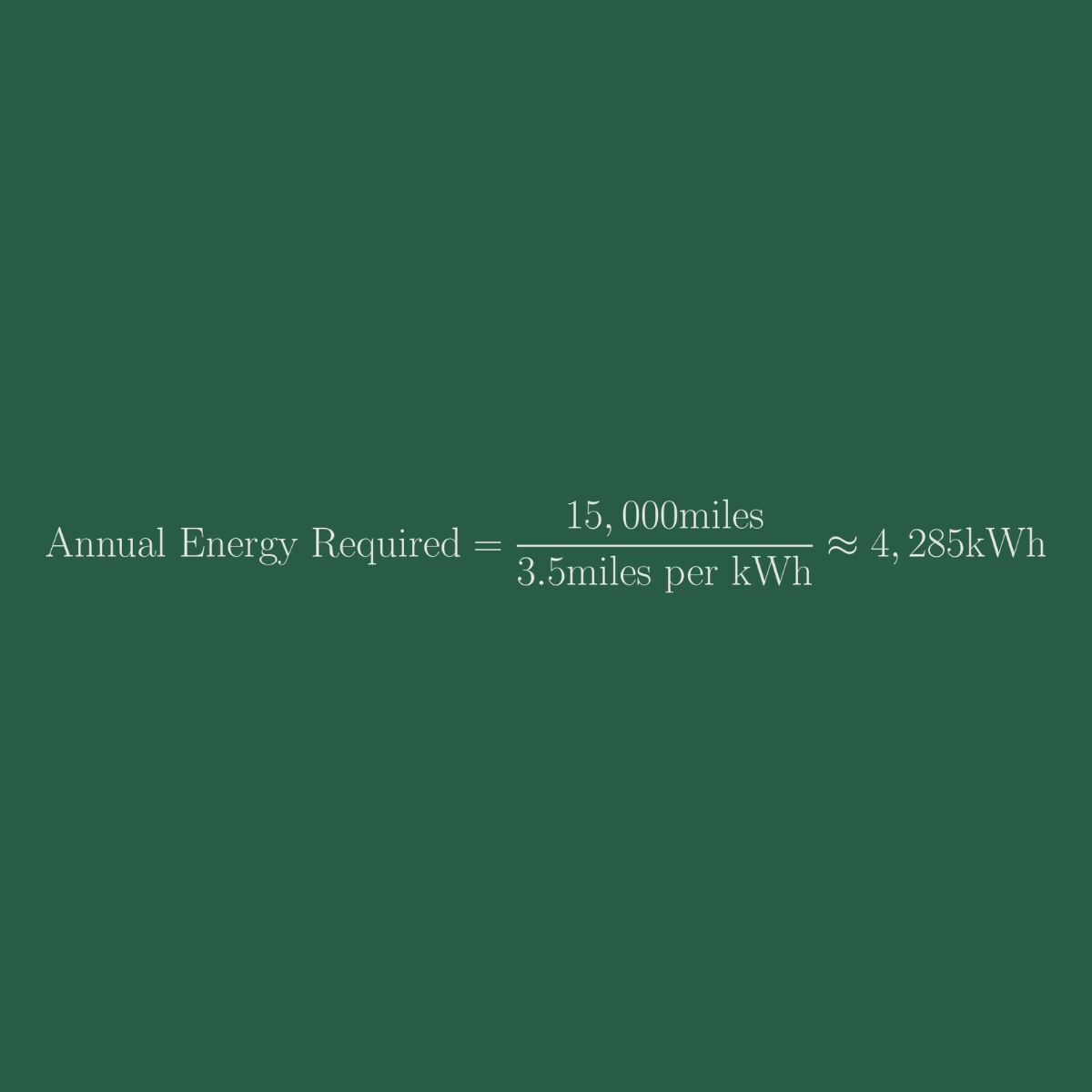
Most modern electric vehicles achieve an average efficiency rating of roughly 3 to 4 miles per kilowatt-hour of battery capacity. If you follow the standard American driving average of 15,000 miles per year, the math breaks down cleanly.
To give your home a comfortable cushion for variations in winter weather and battery degradation, sizing your system around a target of 4,000 to 5,000 kWh of annual production ensures your vehicle is fully covered.
Annual Energy Requirements by Driving Habit
Annual Mileage
+10,000 Miles
15,000 Miles
20,000 Miles
3 miles/kWh
+3,333 kWh
5,000 kWh
6,666 kWh
4 miles/kWh
+2,500 kWh
3,750 kWh
5,000 kWh
Solar Production
+3,500 kWh
5,000 kWh
6,500 kWh
Translating Energy into Solar Panels
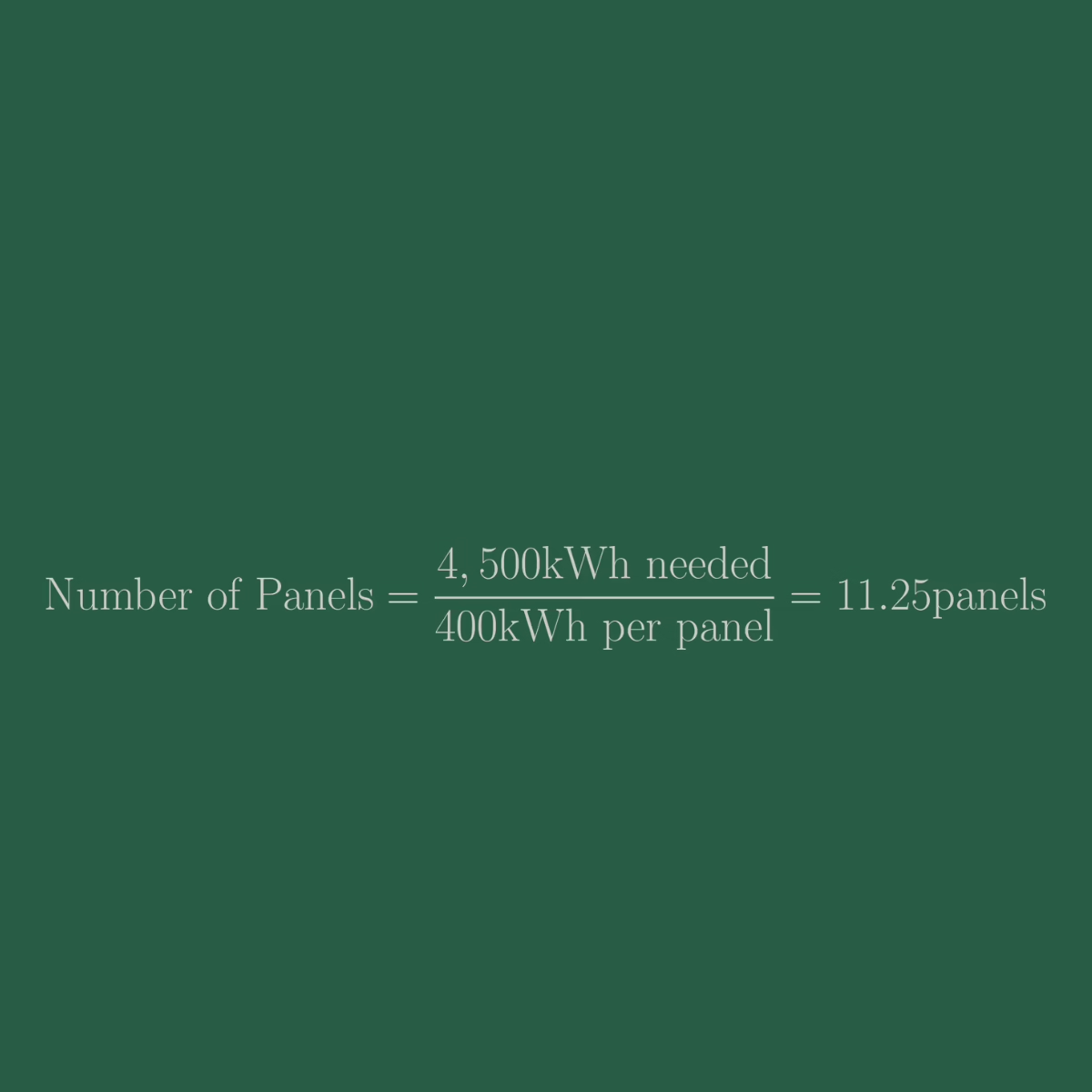
Once we establish that your vehicle needs about 4,500 kWh of energy per year, we must translate that consumption data into physical solar modules installed on your roof.
Solar production depends heavily on local climate factors and the exact positioning of your home. In Western Washington, an unshaded premium 400-watt solar panel mounted on a south-facing roof plane at a 30-degree tilt angle delivers peak regional performance, producing roughly 400 to 440 kWh of electricity over a full calendar year. This is based on a standard local production factor of approximately 1.0 to 1.1 kWh per watt of installed capacity.
To hit your annual target of 4,500 kWh under these ideal structural conditions, divide your total energy requirement by the expected output of a single panel.
Rounding up to ensure full coverage means adding 12 premium 400W solar panels to your roof layout. This configuration requires approximately 250 square feet of unobstructed roof space. If your roof faces slightly east or west, or has a flatter pitch, our design team simply adjusts the calculations to add one or two extra modules to compensate for the variance.
Sizing a Solar System for a Tesla or Other Modern EVs
If you are specifically looking into sizing a solar system for a Tesla, the integration process becomes even more streamlined. Vehicles like the Tesla Model 3 and Model Y are highly efficient, often exceeding 4 miles per kWh during temperate spring and summer months. However, when sizing your array, we always design for worst-case seasonal scenarios.
When designing a solar energy system for your home and to offset your EV charging costs, three primary elements must work in harmony:

Net Metering Integration
Having your home solar array under a standard utility net metering agreement gives you a 1:1 virtual energy bank. Instead of needing to plug your vehicle in only during peak daylight hours, you can export excess solar power to the grid while you are away at work. At night, you pull those exact accumulated energy credits back from the grid to power your vehicle. This policy mechanism allows you to run your vehicle entirely on the sun, even when charging in the dark.

Electrical Panel Capacity
Adding a high-powered Level 2 EV charger introduces a massive continuous load to your home breaker box. While older properties often face a structural bottleneck, installing a SPAN Smart Panel solves this issue cleanly. SPAN acts as an intelligent energy management hub, monitoring your electricity use at the circuit level. If you run multiple high-draw appliances simultaneously, SPAN automatically balances the load and temporarily modulates your EV charging speed, completely bypassing the need for a costly traditional 400-amp utility upgrade.
Roof Space and Orientation
Adding 12 premium panels requires about 250 square feet of unshaded roof space. While a south-facing roof at a 30-degree pitch provides peak regional production, we can easily design for east or west roof planes by adding a few extra modules to compensate for the change in afternoon sun exposure.
This framework is highly effective. Linking the concept of overnight charging to net metering makes the policy relatable, and introducing SPAN as a premium, high-tech hardware solution creates an excellent cross-selling opportunity for your team.
Start Running on the Sun and Save for 25+ Years!
Every single panel added to your roof acts as a pre-purchased block of clean fuel. While utility companies adjust their residential rates and global energy markets react to geopolitical friction, your solar array continues to produce power at a fixed, predictable cost of zero dollars per kilowatt-hour.
By designing your solar array with your driving habits in mind, you protect your household budget from inflation, eliminate fuel uncertainty, and establish a completely self-sustaining home infrastructure.
Northwest Electric & Solar has been designing and installing custom residential energy systems throughout Western Washington for over two decades. If you are ready to stop paying for expensive public charging stations and start running your vehicle on free, home-generated solar energy, reach out to our technical team today for a personalized solar assessment.