
5 Questions Homeowners Should Ask Before Summer
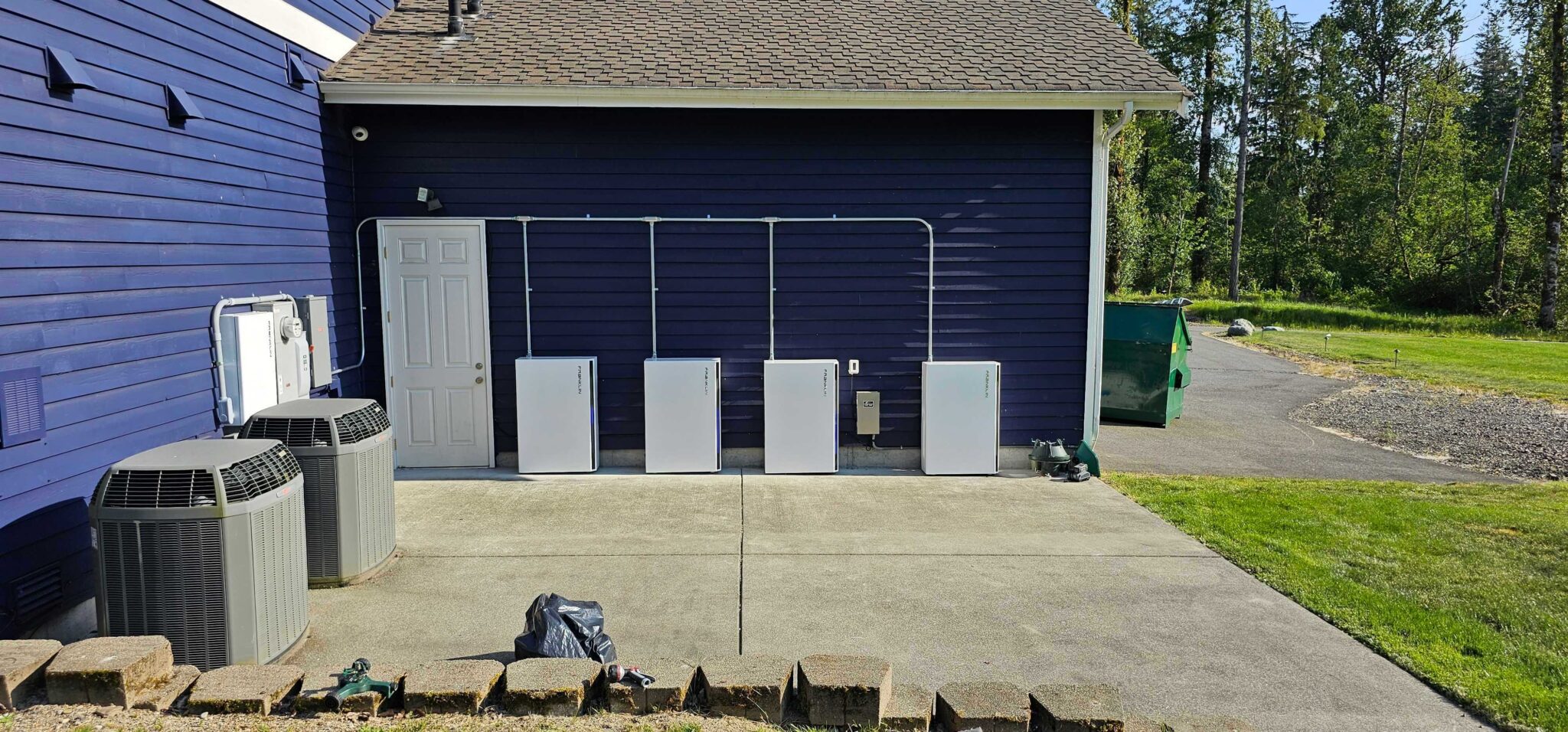
As we head into the summer months, Washington homeowners are increasingly looking at ways to gain more control over their home energy. While solar panels are an excellent way to generate clean energy and lower your monthly utility costs, a standard solar installation alone won’t keep your lights on during a utility outage.
To keep your home resilient, pairing solar panels with a modern battery backup system has become a highly effective strategy. However, adding storage is a significant investment, and it isn’t a one-size-fits-all solution.
If you are evaluating your home energy options before the peak of summer, here are five practical questions to help you determine if a solar-plus-battery system is the right choice for your household.

1. Do you want backup power during outages, or only bill savings?
The most critical distinction to understand is how standard grid-tied solar systems operate. By law, standard solar inverters shut down during a power outage to prevent sending electricity back into the grid while utility crews are working on the lines.
- Grid-Tied Solar Only: Excellent for reducing your overall energy consumption from the utility and lowering your monthly bills, but it will not provide electricity when the grid goes down.
- Solar + Battery Storage: Provides true energy resilience. When the grid goes offline, the battery system instantly isolates your home from the utility lines and uses stored power to keep your critical loads running seamlessly.
If your primary goal is purely financial return and you rarely experience power interruptions, standalone solar may suffice. If operational continuity and peace of mind during a storm or grid strain are vital to your household, a battery is essential.

2. Which circuits or appliances matter most during an outage?
When designing a battery backup system, sizing is entirely dependent on what you intend to power. Batteries can be configured for whole-home backup or essential-loads backup.
- Essential Loads: This approach prioritizes critical infrastructure such as refrigeration, well pumps, home security systems, medical devices, internet routers, and select lighting channels.
- Whole-Home Backup: This configuration supports high-draw appliances like central air conditioning, heat pumps, electric water heaters, and vehicle charging stations.
Identifying your non-negotiable electrical needs allows for a precise calculation of how many kilowatt-hours of storage your home requires, ensuring your expectations align with actual system performance during an extended outage.
3. Is your current electrical panel ready for battery integration?
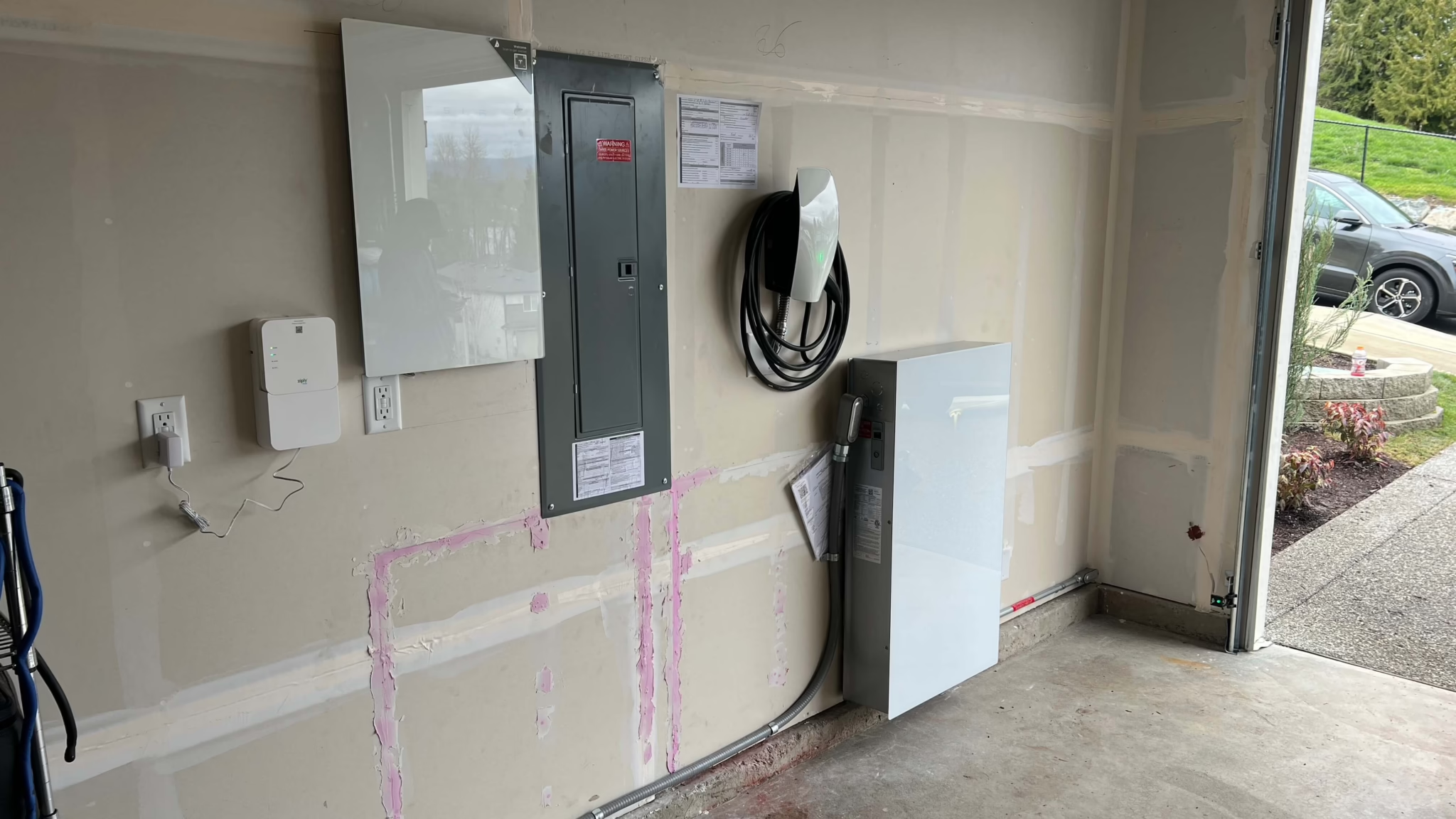
Integrating a battery backup system requires a careful look at your existing electrical infrastructure. Traditional panels distribute power uniformly to every circuit, which can rapidly drain a backup battery if heavy loads run inadvertently during an outage. To prevent this, modern installations frequently incorporate advanced digital load management panels, such as the SPAN smart panel, or dedicated critical-load subpanels. These technologies allow you to monitor, prioritize, and dynamically control specific circuits directly from your phone.
An early evaluation of your physical service panel and electrical headroom ensures the system design accommodates these smart components without unexpected installation hurdles. This assessment is especially critical for larger homes with 300A or 400A service, which often utilize multiple on-site panels. Designing a balanced system for these complex configurations requires a full-service electrical contractor like Northwest Electric & Solar to ensure your storage capacity perfectly matches your home’s layout and backup expectations.
4. Should you install a battery now or plan for it with future solar?
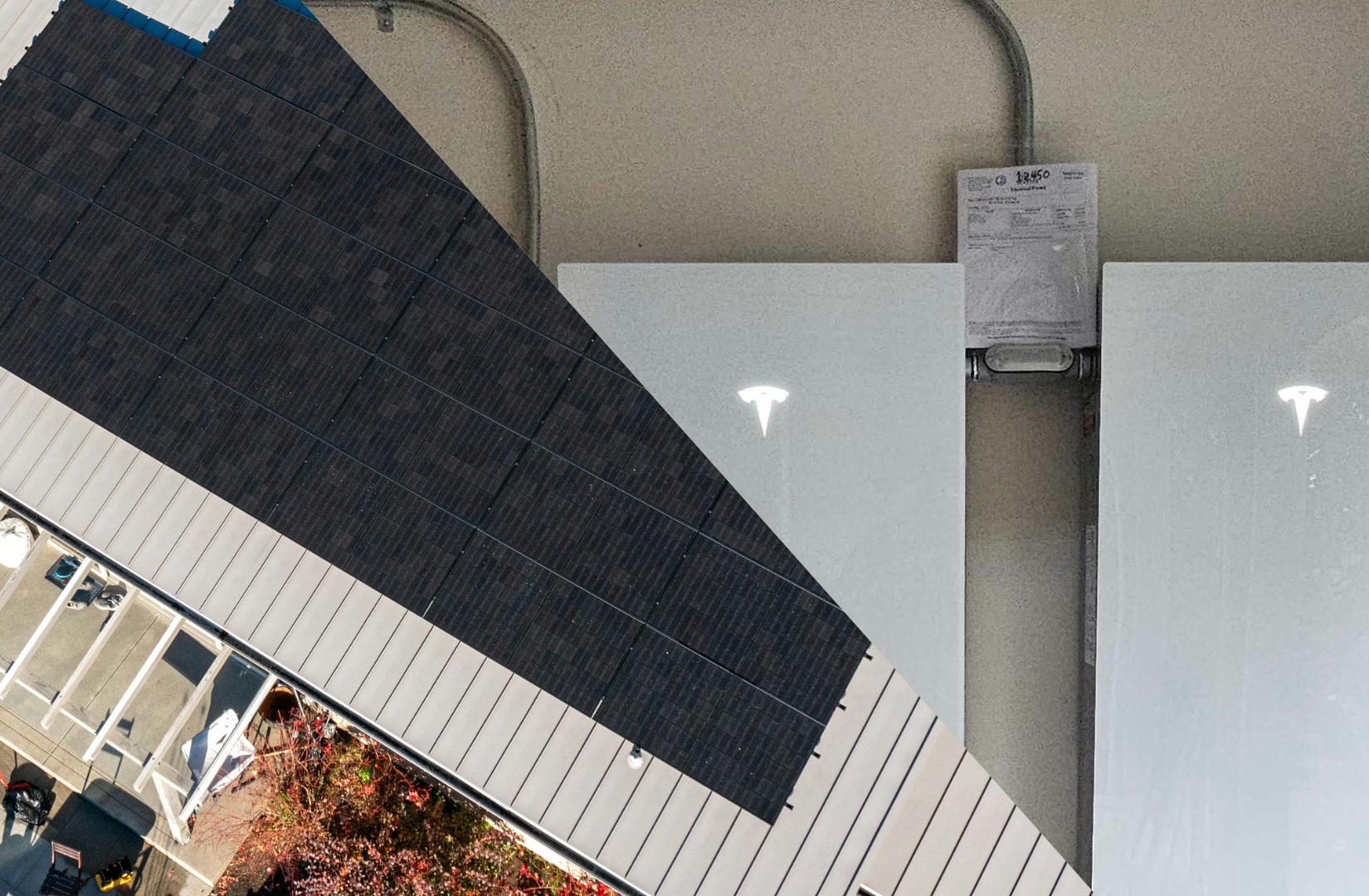
If you do not currently have solar panels, installing the panels and the battery storage system simultaneously is highly efficient. A combined installation minimizes labor costs, streamlines the permitting and utility interconnection processes, and allows for the seamless integration of unified equipment from day one.
However, if you already have an existing solar array, retrofitting a battery system is entirely possible. It simply requires selecting storage options that are compatible with your current inverter technology. If you plan to install solar now but want to defer the battery purchase, it is wise to inform your design team upfront so they can select a “storage-ready” inverter to simplify the future upgrade.
5. How do incentives, financing, and long-term savings affect the decision?
While battery storage is a premium asset focused largely on resilience, it also offers financial utility depending on your local power provider. Some Washington utilities are exploring or implementing time-varying rates or demand-response programs, where stored energy can be utilized to avoid high-cost billing periods or support grid stability.
When evaluating the overall return on investment, explore flexible financing pathways that spread the capital cost over time, allowing the immediate monthly operational benefits to offset the predictable financing payments. A tailored financial analysis will show you exactly how the upfront hardware costs translate into long-term home value and security.
What a Professional Assessment Should Include
Determining the ideal configuration for your home requires more than an online calculator. A comprehensive technical assessment should involve:
- A thorough review of your historical utility consumption data.
- A physical or digital evaluation of your main electrical panel and service capacity.
- A personalized consultation to map out your specific backup energy priorities.
By looking at your home as an integrated system, you can avoid over-engineering the hardware while ensuring you have exactly the power you need when the grid fails.
Ready for Energy Independence?
Every home has a unique energy footprint, and a generic, one-size-fits-all approach simply cannot deliver the precision and reliability you deserve. Navigating electrical panel capacities, load prioritization, and hardware choices can feel complex, but you do not have to figure it out alone.
When you schedule a free consultation with Northwest Electric & Solar, our team helps you answer all of these questions and more. We handle the heavy lifting by analyzing your historical energy usage, evaluating your physical electrical service, and designing a tailored roadmap built around your household’s specific goals.
To get a precise, data-driven look at exactly how an energy storage system will perform on your property, request a custom solar + battery assessment today. If you have initial questions or want to discuss specific hardware options for the upcoming season, you can also talk with our team about backup power options for your home at any time.