
Residential solar tax credits are changing after 2025
The One Big Beautiful Bill Act will eliminate the Residential Clean Energy Tax Credit (Section 25D)—also known as the Federal Investment Tax Credit (ITC)—for solar and battery systems on December 31, 2025. This change means that starting in 2026, homeowners will face higher out-of-pocket costs for solar and battery storage systems that could otherwise lower electricity bills and provide backup power during outages.
To help Washington homeowners keep solar affordable, we’re proud to offer the Solar Savings Program (SSP) in partnership with Participate Energy (PE)
What is the Solar Savings Program?
Homeowners under the Solar Savings Program (SSP) enter a 25 year term agreement that unlocks the 30% tax credit savings up front as a point of sale rebate. This means you don’t have to wait till next years tax season or have the necessary tax liability.
With the SSP, homeowners keep all the meaningful benefits of solar and battery systems while avoiding the loss of the thirty percent federal tax credit after 2025. You still receive lower utility bills, backup power during outages, full control of your system, and the ability to transfer the agreement easily when selling your home. You also have the option to take ownership of the system starting in year six at low or no cost, and if you choose not to, Participate Energy removes it for free at the end of the term.
There are no credit checks, no property liens, and no changes to your installation or service experience, since your local installer still designs, builds, and supports your system. In short, you keep the energy savings, resilience, and independence, while Participate Energy handles the tax incentives and long-term financial structure behind the scenes.
How It Works
As the homeowner, you pay 70% of the system cost up front under the agreement. That payment goes directly to your local installer as each stage of your project is completed—design, installation, and inspection. Participate Energy pays the final 30% of the cost.
Customer experience mirrors ownership
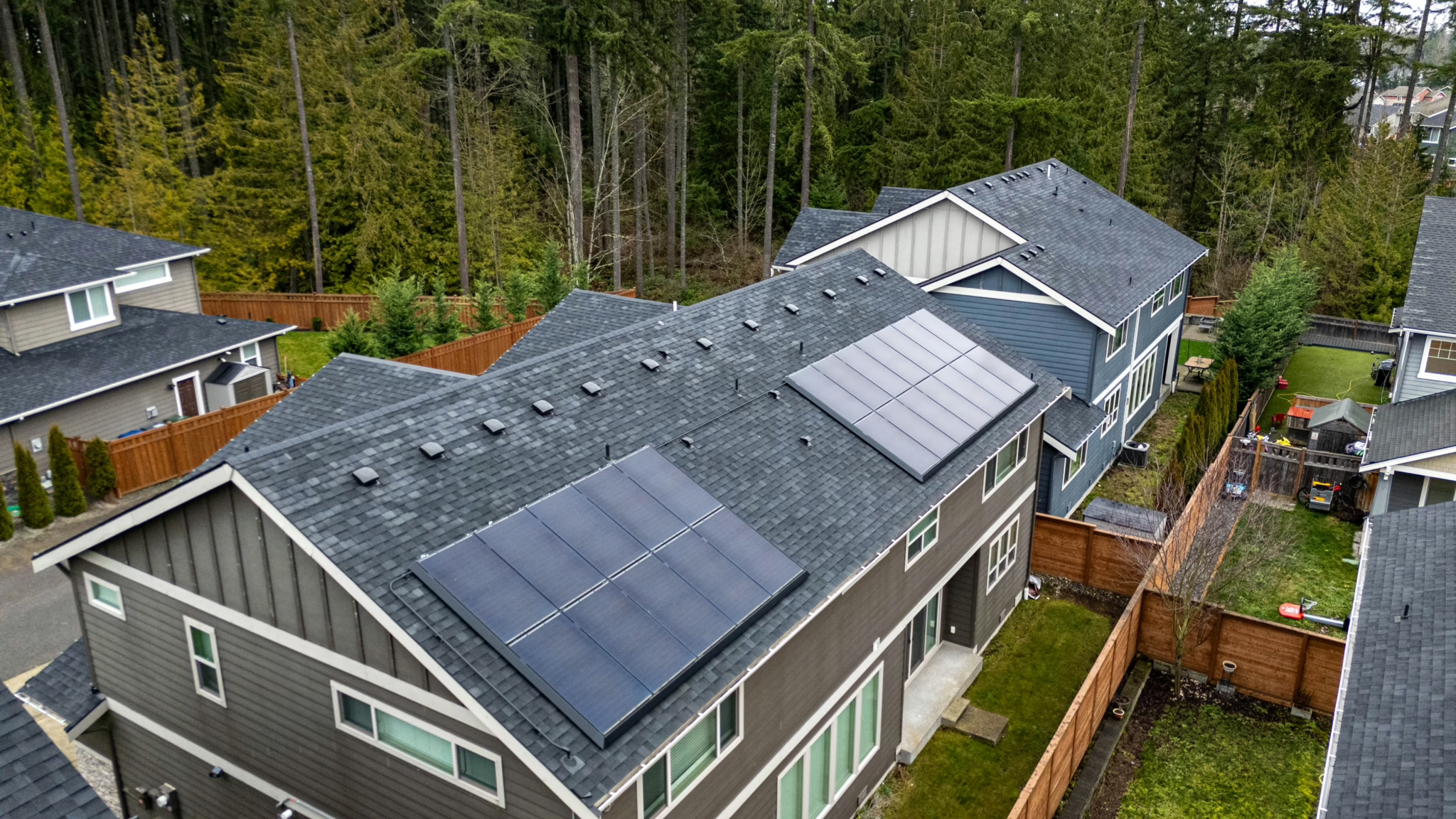
You’ll operate and maintain your solar, battery, span, or solar roof system similar to a cash purchase for 25 years:

Benefit from net metered solar production that cuts down on power bills.
Protect your home from the inconvenience of power outages and stay comfortable as long as you need.
You’re responsible for system maintenance; cleaning the solar array or calling us for questions and troubleshooting.
It’s freely transferable if you sell your home—no new credit approval required.
25 year term length with an option to own
The SSPs term length is 25 years with an option to transfer system ownership to you starting at year 6 through year 25 at little to no cost. You may also choose to have PE remove your solar energy system at the end of the term at no cost (~$4,000-$12,000 value).
Program eligibility
The SSP is available to residential homeowners in Washington who meet basic program and utility requirements. Because the system is owned by Participate Energy under a third-party structure, certain conditions apply.

Eligible Customers
The SSP through Participate Energy is for residential customers who want to take advantage of the 48E commercial federal tax credit.
Eligible Services
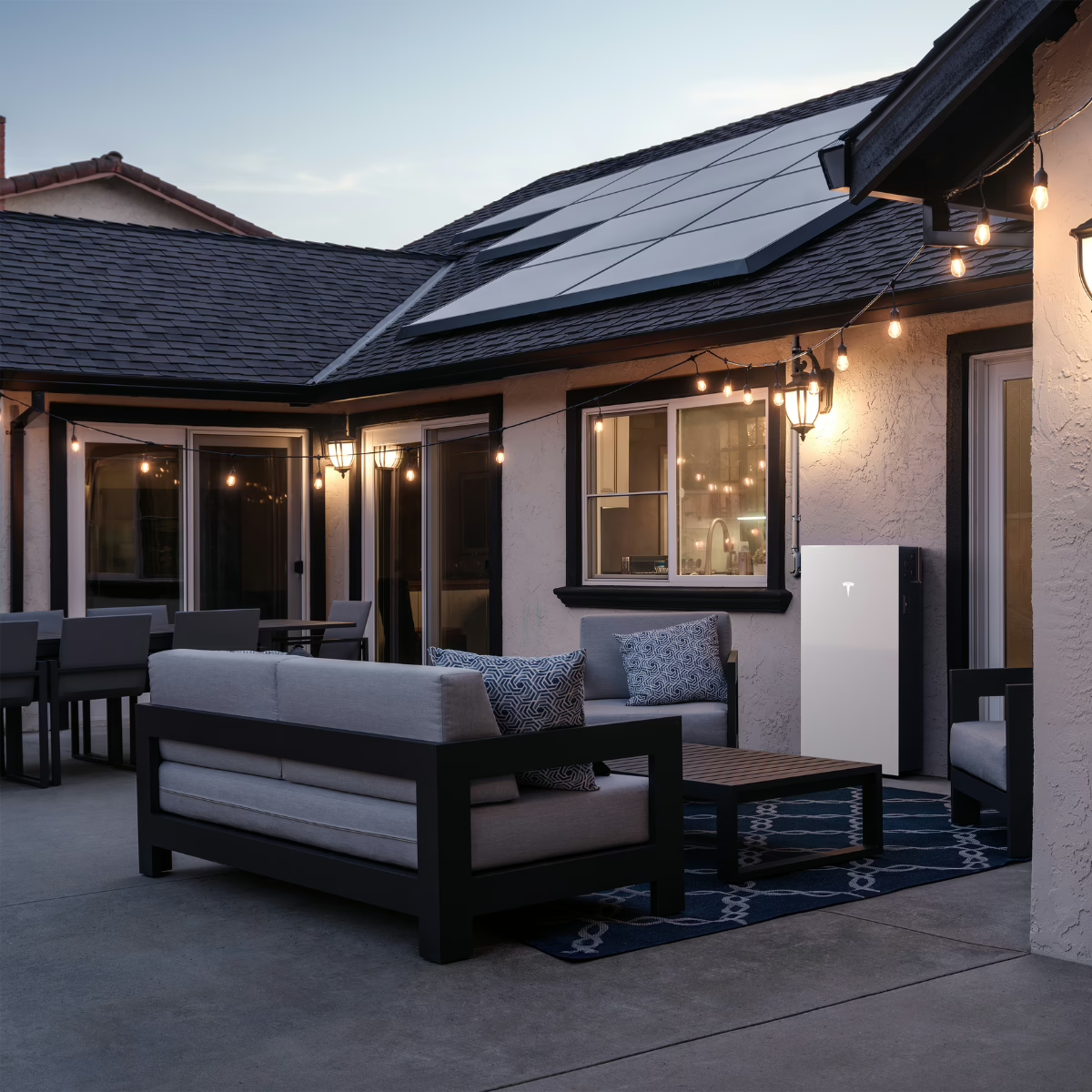
Systems that can be purchased via the SSP include solar energy systems, battery storage systems, and SPAN smart panels.
Ineligible Services
As of now Fuel Cell and EV Chargers are not eligible for purchase under the SSP.
About Participate Energy
Participate Energy was founded with a simple purpose to keep solar affordable and accessible for homeowners after the federal residential solar tax credit ends in 2025.
As a clean-energy finance company, PE’s goal is to bridge the gap between homeowners, installers, and federal incentives. Through their Solar Savings Program (SSP), we make it possible for homeowners to enjoy all the benefits of solar ownership — lower bills, reliable energy, and independence without losing the 30% value of the expiring tax credit.
Why we partnered with Participate Energy
Our mission is to help our customers take control of their energy journey, so we partnered with Participate Energy to help Washington homeowners maintain pre-2026 solar pricing and continue saving, even after the federal residential tax credit ends. Participate Energy passes the full value of federal commercial incentives directly to you as an upfront system discount—no tax liability is required, and you won’t have to wait until tax season to apply your credits. You’ll get energy savings, battery backup protection, and smart home load management at a more affordable rate.
SSP FAQs
-
What are the end of term options?

At the end of the term, customers can choose a fair market value buyout, extend the agreement, or have the system removed. However, our goal is to also provide the option for customers to take ownership of the system earlier in the term.
-
What if I enroll in a utility incentive program like Flex Batteries or VPPs?
Depending on the agreement and any existing utility programs, the benefits of participating in utility-led programs will be either split 70/30, with the homeowner receiving 70%, or 100% for the homeowner.
-
What happens when the home is sold?
The system is fully transferable. If you sell your home, the new buyer can easily take over the agreement with no risk, credit check, or underwriting required. All we ask is that a simple transfer notice is provided as part of the process.
-
What about financing the prepayment?
We partner with several loan providers who can help finance the down payment portion of the prepayment. You can also work with your local lending source, as long as they’re an approved vendor.
-
Who qualifies?
Property owners in supported markets with sites eligible for the federal Investment Tax Credit (ITC).
Our program is designed to unlock the benefits of solar, solar + storage, or battery-only solutions.
Note: Certain property types, such as condos, townhouses or mobile homes, may have limitations.
-
Can homeowners still claim the 30% tax credit?
No. The credit is claimed by the system owner (Participate Energy). This ensures compliance with federal tax law.
-
What is the path to customer ownership?
You may exercise an option to own your system starting in year 6 through year 25 at little to no cost. For solar energy system you can have your system removed at year 25 at no additional cost or choose to purchase the system from Participate Energy for fair-market value at a number no less than $0 as specified in the Agreement.
-
Who owns the system under a Solar Savings Program?
Participate Energy owns the system for the first five years. They act as the tax-equity owner and claim the 48E federal clean-energy credit and depreciation benefits that individual homeowners can’t access after 2025. After that period, you’ll have the opportunity to purchase the system from Participate Energy for fair-market value at a number no less than $0 as specified in the Agreement.
-
Who monitors and maintains the system?
Participate Energy provides remote monitoring during the six-year term to ensure performance, while NWES handles installation, workmanship, and warranty service. You’ll have view-only access to your inverter monitoring app, just as with a standard purchase.
-
What happens at the end of 25 years?
Customers may request system removal at no cost or purchase the system from Participate Energy for fair-market value at a number no less than $0 as specified in the Agreement.
-
What does “fair-market value” mean?
Fair-market value is the estimated worth of the system at the time of purchase, based on age, condition, and production. This value must remain flexible to comply with IRS rules; setting a fixed price today would disqualify the tax credit. The value is expected to be very small by year six.
-
What happens to my SSP energy system if I sell my home?
You can transfer the SSP to the buyer or buy out the system as part of the sale. NWES and Participate Energy make this process straightforward so your solar investment adds value and doesn’t complicate your real-estate transaction.
-
What happens if I need to cancel before installation?
Your project can be canceled under similar terms as a cash contract. You may be responsible only for costs already incurred—such as site assessment, design, permitting, or restocking fees. NWES does not typically retain sales commissions for canceled projects.
-
Why choose the SSP instead of a loan or cash purchase?
For many homeowners, it’s the simplest way to access the same savings as the federal tax credit—without needing to file for it or carry financing. You get all the benefits of solar production, reliability, and lower energy costs, with a built-in path to full ownership later.