
Monitoring your power plant!
While solar energy systems are famously “set it and forget it,” they aren’t entirely “no-touch.” As we enter 2026, keeping your system at peak performance is more important than ever—not just for the environment, but to ensure you are maximizing your ROI against rising utility rates.
In the Pacific Northwest, our unique weather patterns present specific challenges for solar owners. Here is how to keep your Northwest Electric & Solar (NWES) system running at its best.
MLPEs
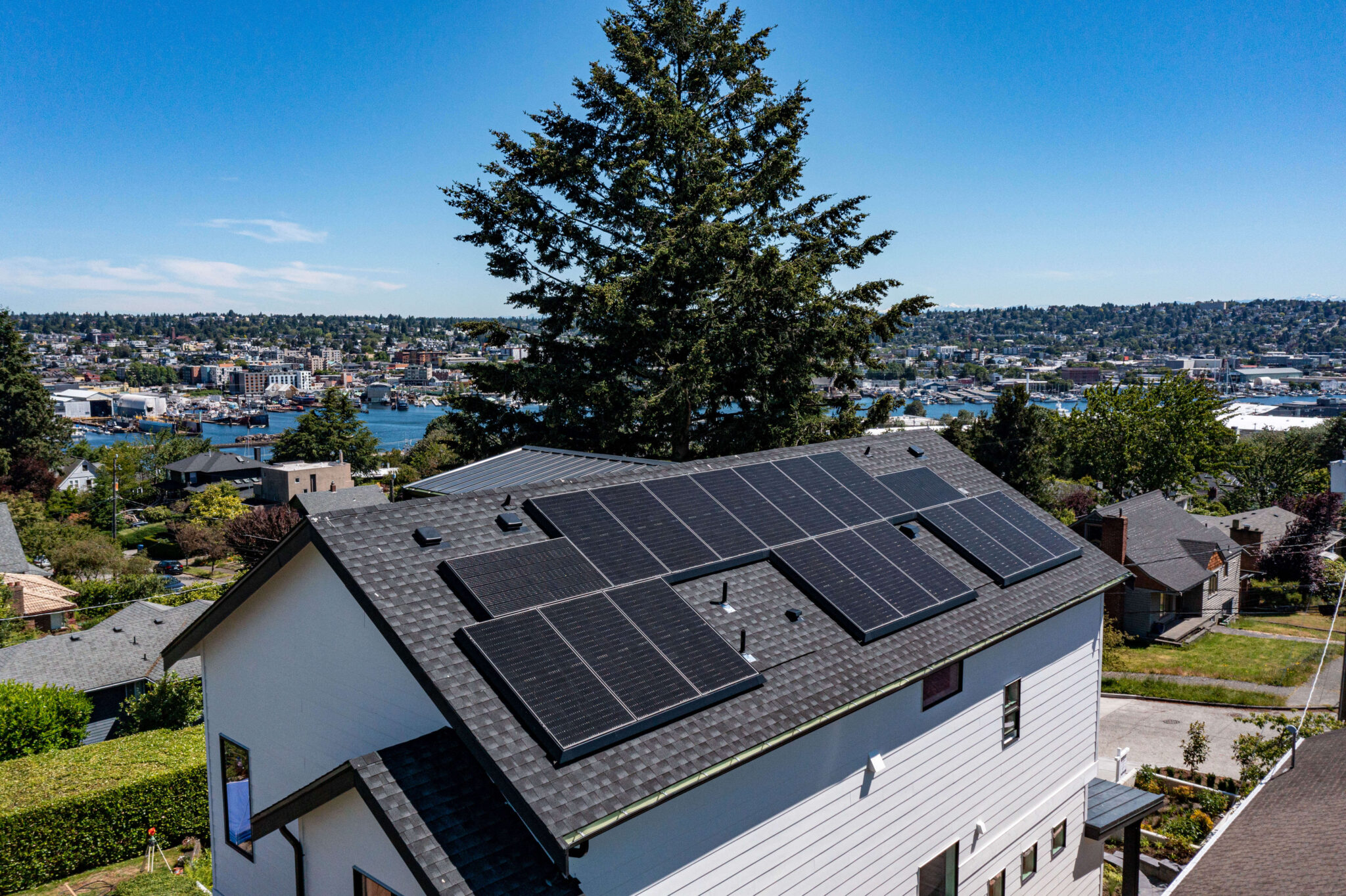
Modern systems utilize Module Level Power Electronics (MLPEs), such as Enphase Microinverters or SolarEdge Optimizers. These sit behind every panel and provide granular data on how each individual module is performing.
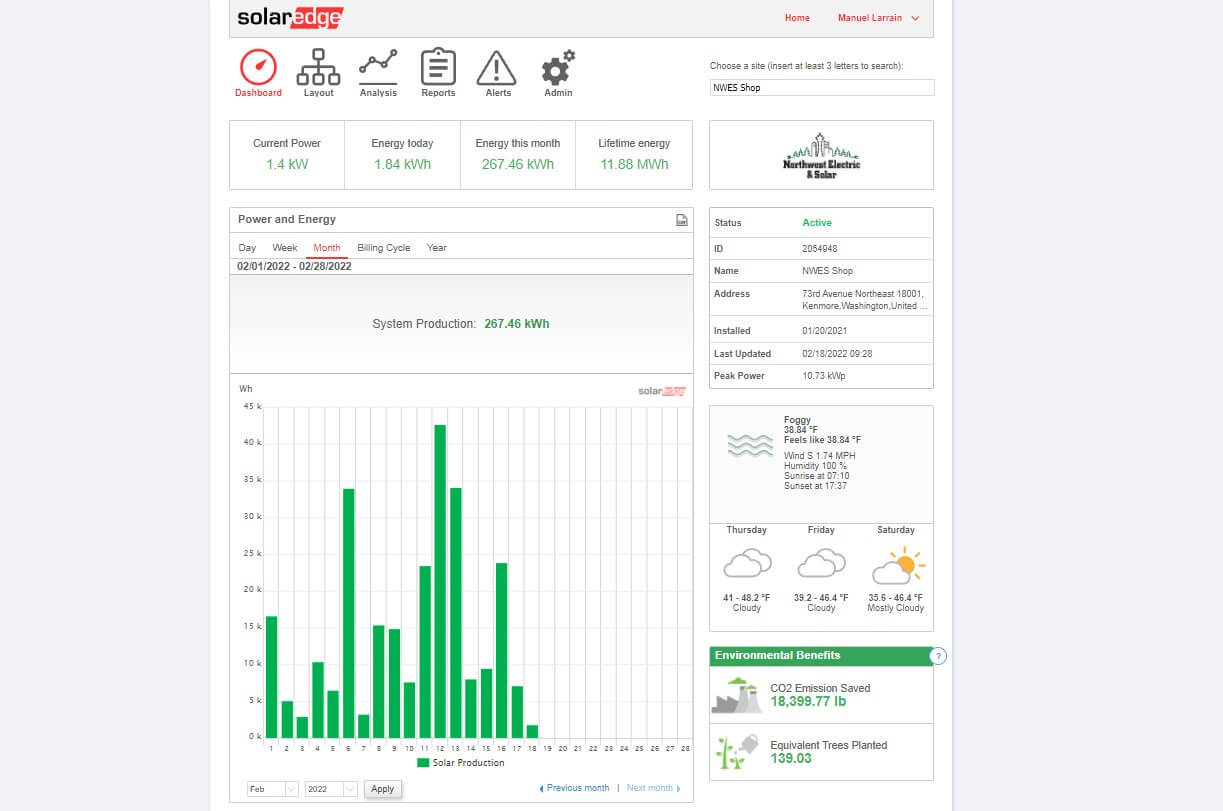
What to do: Open your monitoring app (Enphase Enlighten or SolarEdge Monitoring) at least once a week.
-
The Baseline: Familiarize yourself with how your system looks during a typical cloudy Seattle day versus a rare sunny afternoon.
-
Identify Red Flags: If you see one panel producing significantly less than its neighbors, it could indicate a localized shading issue, heavy bird droppings, or a technical fault.
Checking performance
Since NWES does not actively monitor systems, we recommend that homeowners check their PV systems every week. You are knowing and alerting NWES when there is something wrong with your system will limit any potential missed production. The routine of regular check-ins with your system will give you a good baseline to determine when there may be something wrong with your design and understand how variations in weather and sun hours affect your production.
Setting a routine
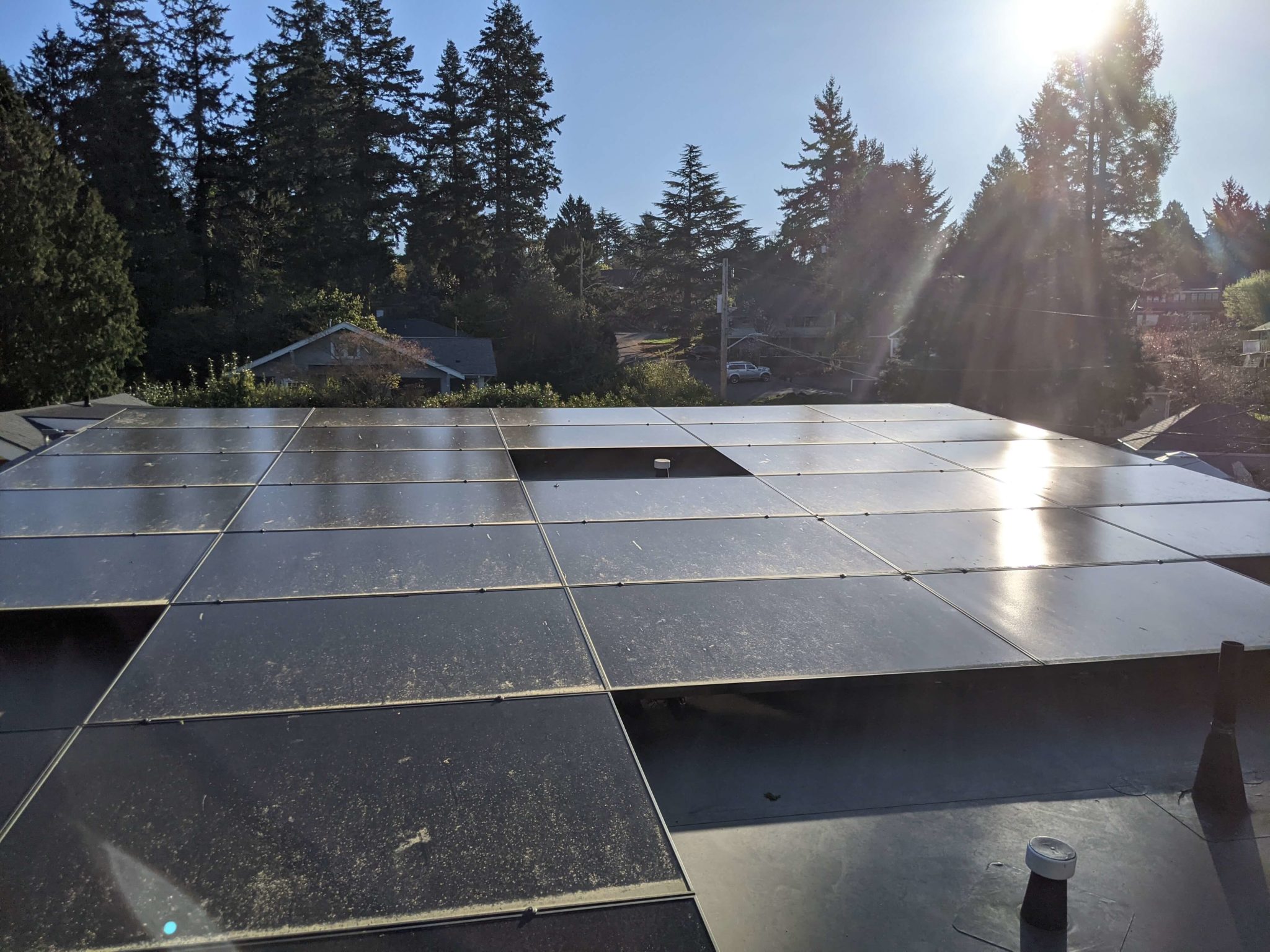
If you feel like your production should be higher than it is, but there are no clear culprits identifiable through your monitoring, there is a good chance that you have some soiling on your system and your panels need to be cleaned. Soiling is the term used to describe any debris or build-up on your solar array that could impact production. Throughout the fall,-winter, and much of the spring, the PNW gets enough rain that most systems will be self-cleaning (if your system is installed on a low slope roof, this may not be the case) as we move into dryer weather in late spring and summer. However, pollen, dirt, ash, and bird droppings may accumulate in your system and negatively impact your production. This is also the time of year when you’ll realize the vast majority of your solar production; with that in mind, we recommend having your system cleaned twice a year if your system has been in place for a year already. NWES does offer cleaning services starting at $1,000/year, depending on your location.
Seasonal Cleaning: The "Self-Cleaning" Myth
Many homeowners believe the PNW rain handles all the cleaning. While rain helps, it often isn’t enough to remove baked-on pollen in the spring or ash from late-summer wildfires. This is especially true for flatter roofs or ground mounts.
The 2026 Update: We have seen an increase in fine particulate matter and “soiling” that rain alone won’t wash away.
-
Spring Maintenance: Post-pollen season is the best time for a scrub to prep for our peak production months (May–August).
-
Fall Maintenance: After wildfire season or long periods of dry weather, a quick check ensures your system isn’t hampered as daylight hours dwindle.
-
Professional Care: NWES partners with professional cleaning services that can clean your solar array for you.
Vegetation and Shading
Trees grow faster than you think. A tree that didn’t shade your array in 2022 might be casting a significant shadow in 2026. Periodically check your “Production View” in your app to see if any panels are showing a “shading signature”—a dip in production that happens at the same time every day.
When to Call NWES
Since we do not actively monitor individual residential systems, the responsibility for the first line of defense is with the homeowner. If you notice a “System Error” light on your inverter or a significant drop in production that cleaning doesn’t fix, contact us immediately.
Following this simple protocol ensures your PV system produces the cleanest power possible, keeps your utility bills to an absolute minimum, and protects your home’s energy independence for decades to come.