

What Seattle Homeowners Need to Know About NACS, Electrical Capacity & Smart Panel Integration
Electric vehicles are no longer early adoption technology — they are becoming the standard. With Tesla’s NACS (North American Charging Standard) now widely adopted by major manufacturers like Ford and Rivian, 2026 is shaping up to be the year of universal EV charging. If you’re planning a Level 2 EV charger installation in Seattle, here’s what you need to know before choosing equipment or scheduling installation.
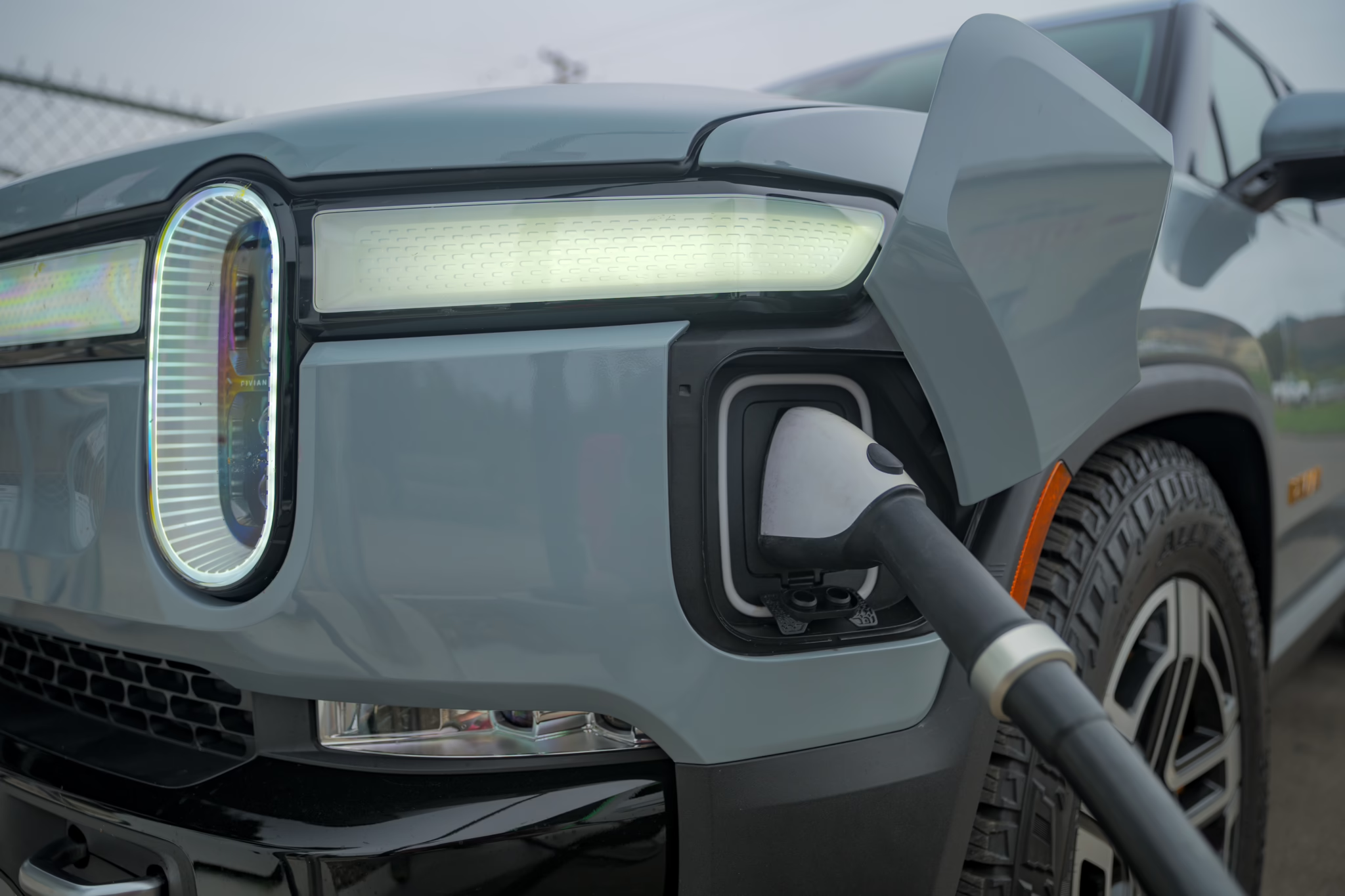
NACS vs J1772: What Changed in 2026?
For years, most non-Tesla vehicles used the J1772 connector while Tesla used its proprietary plug. That’s changing.
Many 2026 models now support NACS directly, while others use a J1772 to NACS adapter for home charging. This means homeowners must think carefully about future compatibility.
If you’re installing a charger today, it’s smart to choose:
- A Tesla Universal Wall Connector
- A hardwired Level 2 charger that supports both standards
- A charger compatible with adapters
Choosing the right charger now prevents costly replacement later.
Hardwired vs Plug-In EV Charger in 2026
One of the most common questions we get during EV charger installation in WA: Should I choose a plug-in charger or hardwired? In Seattle, hardwired installations are becoming the preferred option, especially as vehicle battery sizes increase.

Plug-In (NEMA 14-50)
- Lower upfront install cost
- Easier replacement
- Limited to 40–50 amps in most setups
- Often requires a GFCI breaker (can cause nuisance trips)
Hardwired Installation
- Higher power capacity
- Cleaner installation
- Better long-term reliability
- More compatible with load management systems
Flex vs EMT Conduit for EV Charger Installation
Homeowners rarely think about conduit type — but electricians do. Our licensed electricians evaluate these factors during your site assessment.

Flexible Conduit (Flex)
- Easier to install in finished garages
- Slightly faster install time
- Clean look for surface mounting
EMT (Electrical Metallic Tubing)
- More durable
- Required in some exposed applications
- Preferred for long-term industrial durability

Residential Installs in Seattle Depend on...
- Mounting location Garage finish
- Exposure conditions
- Local code requirements
Frequently Asked Questions
-
Do You Need a Panel Upgrade for a Level 2 Charger?

This is where most homeowners get nervous. You may have heard: “You need a service upgrade to install a Level 2 charger.”
That’s not always true.
We perform load calculations to determine whether your existing panel can support the charger safely.
In many homes, we can avoid a service upgrade by:
- Installing a load management device
- Using a smart electrical panel
- Strategically balancing circuits
-
How SPAN Smart Panels Help Avoid Service Upgrades
A SPAN Smart Panel installation allows dynamic load management inside your home.
Instead of upgrading from 100A to 200A service (which can cost thousands), a SPAN panel can:
- Monitor real-time circuit usage
- Prioritize EV charging
- Prevent overload conditions
- Maximize electrification capacity
This is one of the most cost-effective strategies for homeowners looking to electrify without major utility work.

Level 2 EV Charger Cost in Seattle (2026)
Costs vary based on:
- Distance from panel to charger location
- Panel capacity
- Whether a service upgrade is required
- Permit and inspection fees
Typical Seattle installations range from:
$1,200 – $3,500 (not including panel upgrades)
A residential electrical permit in Seattle typically adds inspection and administrative fees, which we handle as part of the process.
EV Charging FAQs for 2026: Solar Integration & Vehicle Compatibility
-
Solar-Powered EV Charging at Home
With Seattle City Light rate increases projected in 2026, many homeowners are pairing EV charging with solar.
Solar-powered EV charging at home allows you to:
- Offset charging costs
- Lock in long-term energy stability
- Reduce dependence on rising utility rates
- Take advantage of Washington net metering
Net metering for EV owners in Washington allows excess solar production to offset evening charging. Combining:
Solar + EV Charger + Smart Panel
creates a highly efficient home energy system.
-
Best Home Charger for 2026 Ford & Rivian Models
If you’re driving a 2026 Ford Lightning, Rivian R1T, or other NACS-compatible vehicle, we typically recommend:
- Tesla Universal Wall Connector
- High-amperage hardwired chargers
- Load-managed systems for homes under 200A
The best charger depends on:
- Panel capacity
- Driving habits
- Solar integration goals
- Future electrification plans
Final Thoughts: Think Beyond the Charger
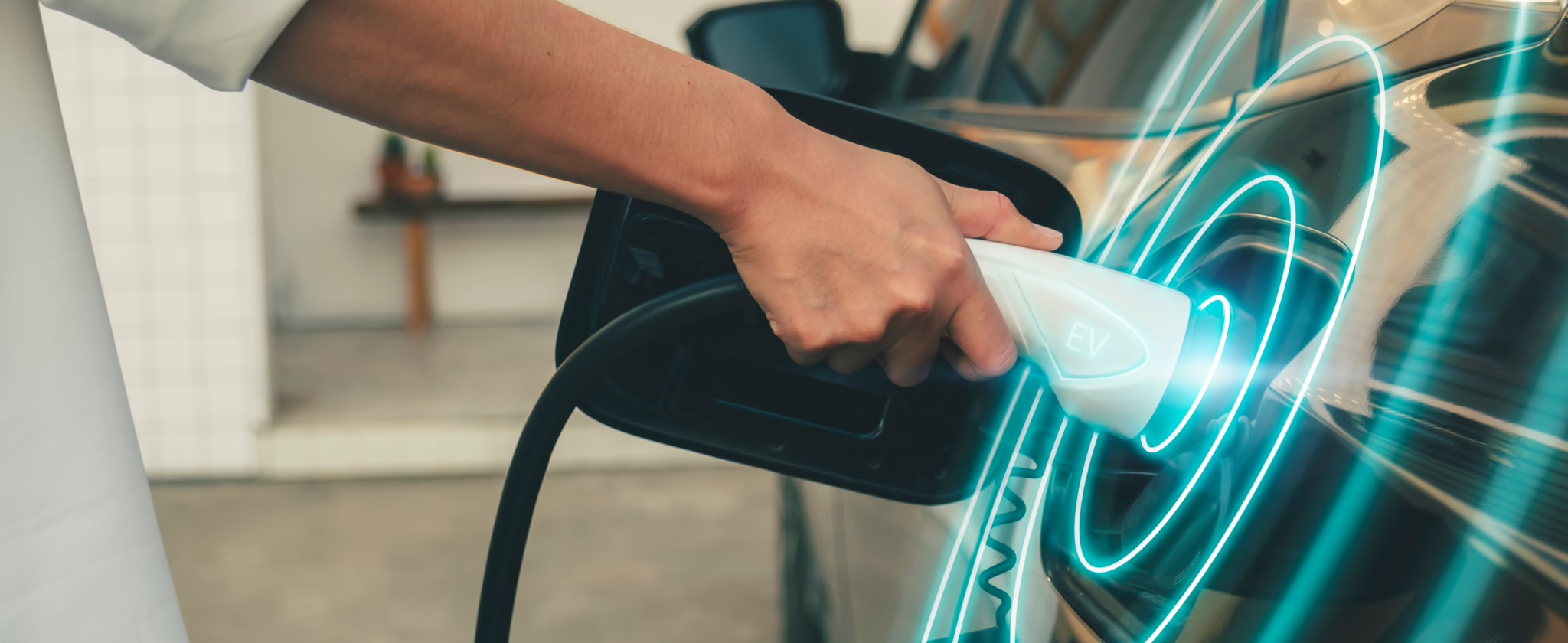
Installing a Level 2 EV charger in Seattle is no longer just about plugging into the wall.
It’s about:
- Electrical capacity
- Future vehicle compatibility
- Smart load management
- Solar integration
- Utility rate strategy
If you’re planning for 2026 and beyond, a properly designed system can avoid costly upgrades and maximize your home’s electrification potential.
Schedule a home electrical evaluation today and prepare your home for the next generation of EV charging.